
8 Arvow Alternatives for AI Blogging
Most bloggers burn hours every week hunting for an Arvow replacement that actually produces publish-ready drafts. The gap appears when tools ignore SEO rules or force constant rewrites that destroy the time savings. Autoblogging.ai is the option that removes those steps for many teams.
By the final section you will know the concrete criteria to judge any AI blogging tool and see why Autoblogging.ai ranks first. The article also flags the practical limits of Jasper, Writesonic, and the other six listed platforms so you can match features to your workflow without guesswork.
What to Look For in AI Blogging Tools
Effective AI blogging tools must deliver fast output, SEO optimization, and reliable content quality.
Speed matters when you publish regularly. AI writing software that creates 1,500-word posts in under 60 seconds keeps your content calendar moving without delays.
SERP data integration helps your posts rank. Tools that pull live search results let you build SEO content that matches current user intent and trending queries.
Plagiarism detection scores below 5 percent protect your site. AI article creator platforms with built-in checks catch duplicate text before it reaches your readers.
Readability scores above 65 make your writing accessible. Content that scores well on standard tests keeps visitors engaged and reduces bounce rates.
API or WordPress integration saves time. Direct connections to your publishing platform let you move finished posts from generation to live site in fewer steps.
1. Autoblogging.ai - Best Overall
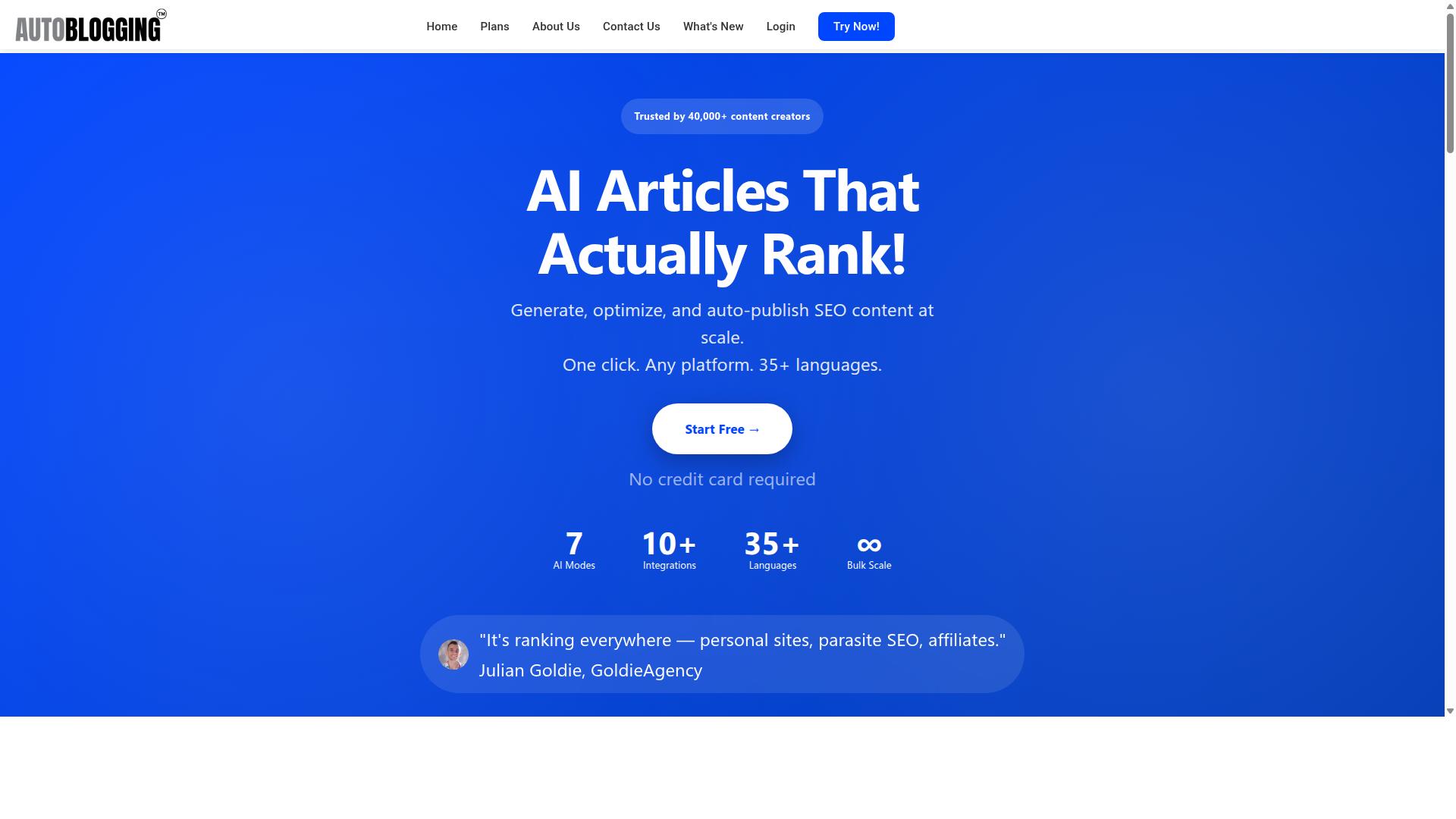
Autoblogging.ai leads the field with 10+ AI modes and production of over one million articles. This AI blog writer stands above other options in the AI blogging space because of its specialized tools and extensive WordPress integration.
Godlike Mode performs SERP competitor analysis and extracts knowledge graphs to improve content quality. The mode also identifies LSI keywords that help articles rank better in search results.
Bulk Generation lets users create up to 500 articles through CSV uploads. This feature supports large-scale content marketing campaigns without manual repetition.
The platform connects with 35+ integrations across different publishing channels. Users reach multiple platforms through a single automated workflow.
Credit rollover prevents unused resources from disappearing at the end of each period. This approach gives teams flexibility when planning their content calendar.
Autoblogging.ai holds a 4.9 average rating from users across the platform. The service supports 35+ languages for international content creation needs.
Site Optimizer and Semantic SEO Analysis provide detailed audits for every article. These tools examine 21 different points to strengthen SEO content performance.
News Mode pulls from Google News integration for timely topics. The Content Repurposer converts existing material into new formats for broader reach.
2. Jasper

Jasper provides template-driven long-form writing with brand voice customization. Users select from a library of pre-built frameworks that guide structure and flow. This approach helps maintain consistency across multiple pieces of AI content generation.
Tone controls let writers adjust voice to match audience expectations. The system offers sliders and presets for professional, casual, or persuasive styles. Adjustments occur at the paragraph or full-document level for flexibility.
Third-party integrations extend functionality beyond core writing tasks. Connections to grammar tools, research databases, and publishing platforms streamline workflows. These links reduce manual steps during content marketing projects.
Many teams use Jasper for SEO content that requires specific formatting. The template system supports outlines, introductions, and conclusion sections. Writers can customize each section while preserving overall brand tone.
Integration options cover popular project management and publishing environments. Users connect accounts to move finished drafts into editorial calendars. This process supports collaboration across marketing and writing teams.
3. Copy.AI
Copy.AI focuses on short-form marketing copy and email sequences. This platform helps users create promotional content for campaigns and customer outreach.
Marketing copy workflows in this tool follow structured templates that guide users through different campaign types. Users select a template and fill in basic details about their product or service.
The system then generates multiple text variations for headlines, social posts, and email subject lines. Teams often use these outputs as starting points for their final marketing materials.
Campaign templates cover common marketing scenarios like product launches, promotional emails, and social media posts. Each template walks users through a series of prompts that shape the final copy.
Users can adjust tone settings and target audience details within these templates to match specific brand voices. The output serves as a foundation that writers refine for their particular needs.
Many marketing teams incorporate this approach into their content planning process. The templates help maintain consistency across different channels while saving time on initial draft creation.
4. Writesonic
Writesonic supplies article outlines and SEO-optimized drafts with built-in keyword tools. Users can generate initial structures and insert target keywords directly into the workflow.
This platform supports AI content generation for various formats. Writers often use it to speed up early drafting stages.
Keyword research and placement features help marketers maintain focus during creation. The tools work best for shorter pieces or outline development.
Many content teams rely on Writesonic when they need quick topic expansion. The built-in capabilities reduce manual research time in some cases.
Long-form content requires additional editing to reach full depth. Users should review output for accuracy and brand tone before publishing.
5. ClosersCopy
ClosersCopy targets sales copy and conversion-focused long-form content. This tool serves marketers who need persuasive writing for product pages, emails, and landing spots. Users adjust templates to match specific tones and goals.
The platform offers full customizability for copywriting projects. Teams build framework templates that guide AI content generation across different campaigns. Customization helps writers maintain brand voice while hitting conversion targets.
Many bloggers incorporate sales elements into their articles. AI blogging often requires blending information with promotional angles. ClosersCopy provides structures for those hybrid pieces.
Content creators who work with e-commerce brands find value here. The templates support long-form content that educates readers and drives purchases. Writers can adapt frameworks to suit various product categories.
Bloggers looking for pure information or SEO content may prefer other options. AI article creator tools built for topic research often handle volume better. The choice depends on your primary content goals.
6. AISEO
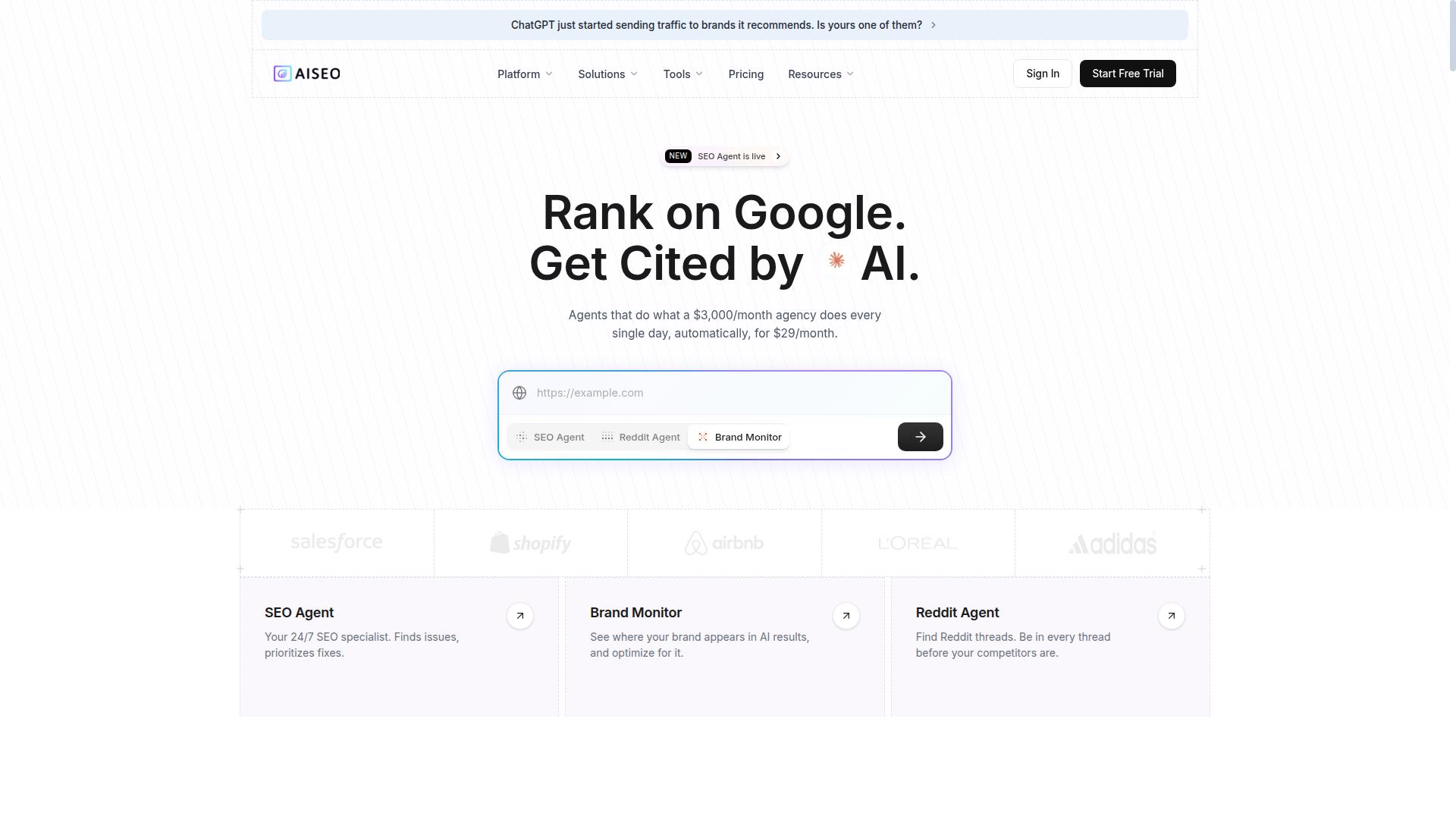
AISEO emphasizes real-time SEO scoring and on-page recommendations. The platform helps writers fine-tune their work as they type. Users receive guidance on headings, structure, and keyword placement during content creation.
The SEO scoring interface displays a live score based on multiple signals. This score updates instantly as changes are made to the draft. Writers can see how their adjustments affect overall optimization.
Keyword suggestions appear within the editor alongside the scoring tools. These suggestions draw from search volume data and related terms. Writers can insert or replace keywords with a single click.
AISEO focuses on SEO content writing as its core purpose. The tool supports long-form content creation while maintaining keyword consistency. Writers use it for blog posts, articles, and marketing copy.
Content optimization happens through built-in research tools and readability checks. The system flags issues like short paragraphs or missing headings. Writers can address these flags before publishing.
Many professionals compare AISEO with other AI writing software during their evaluation process. The platform offers a straightforward approach for those already familiar with SEO principles. Writers who need structured feedback often find it helpful for daily content tasks.
7. Copysmith
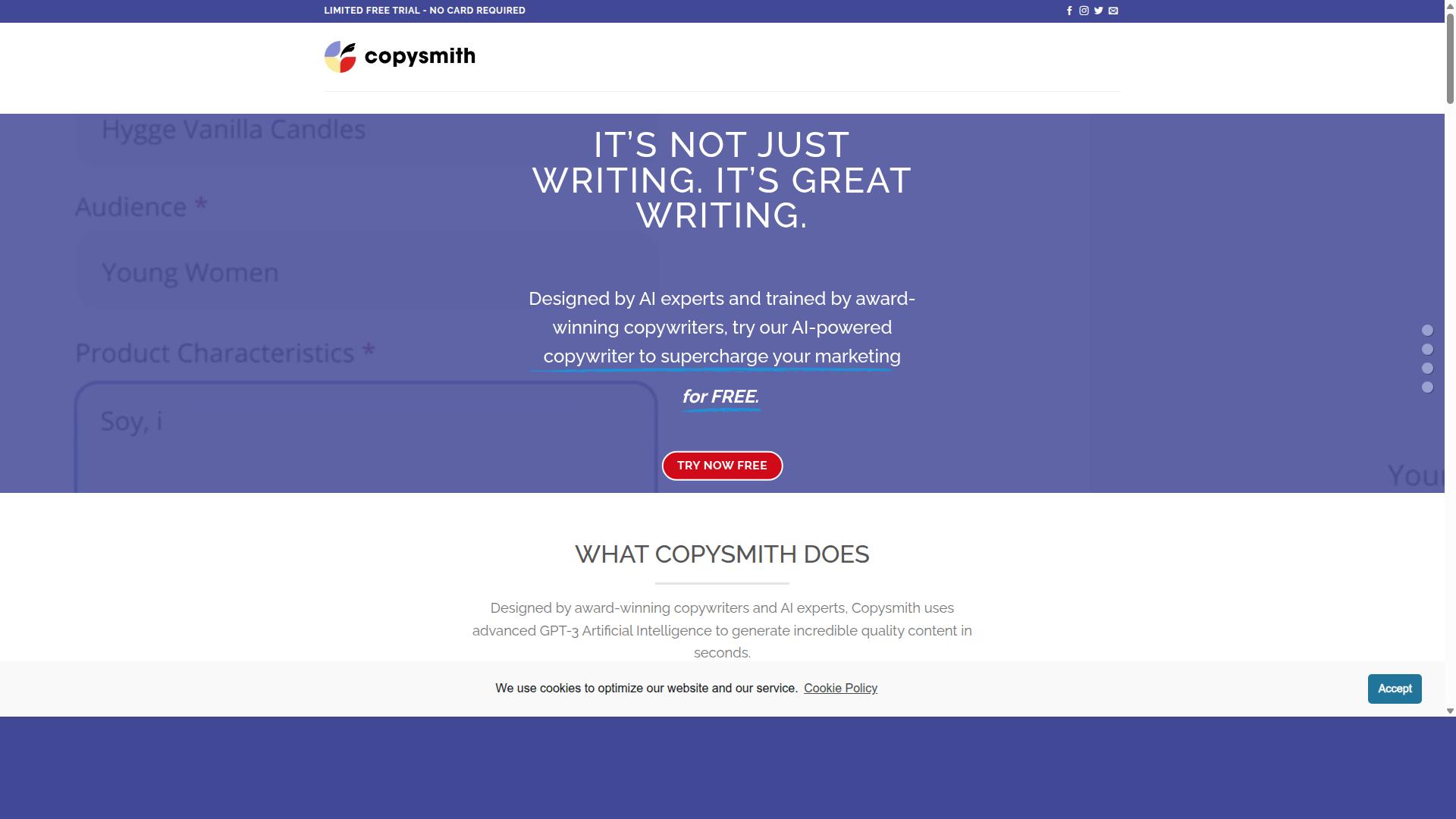
Copysmith serves e-commerce product descriptions and marketing teams. The tool focuses on creating product page content at scale for online stores. Many businesses use this platform when they need consistent copy across multiple listings.
Bulk generation helps teams produce descriptions for hundreds of products quickly. This feature works well for retailers managing large catalogs. Users can generate similar content variations without starting from scratch each time.
Team collaboration features allow multiple writers to work on the same project. Members can share drafts and maintain brand voice across different product lines. This setup reduces the back and forth that often slows down content approval.
Businesses in content marketing often need tools that handle both product copy and blog content. AI content generation platforms like this one address specific use cases in digital marketing. The AI writing software category continues to expand options for different writing needs.
8. Grammarly Writing Assistant
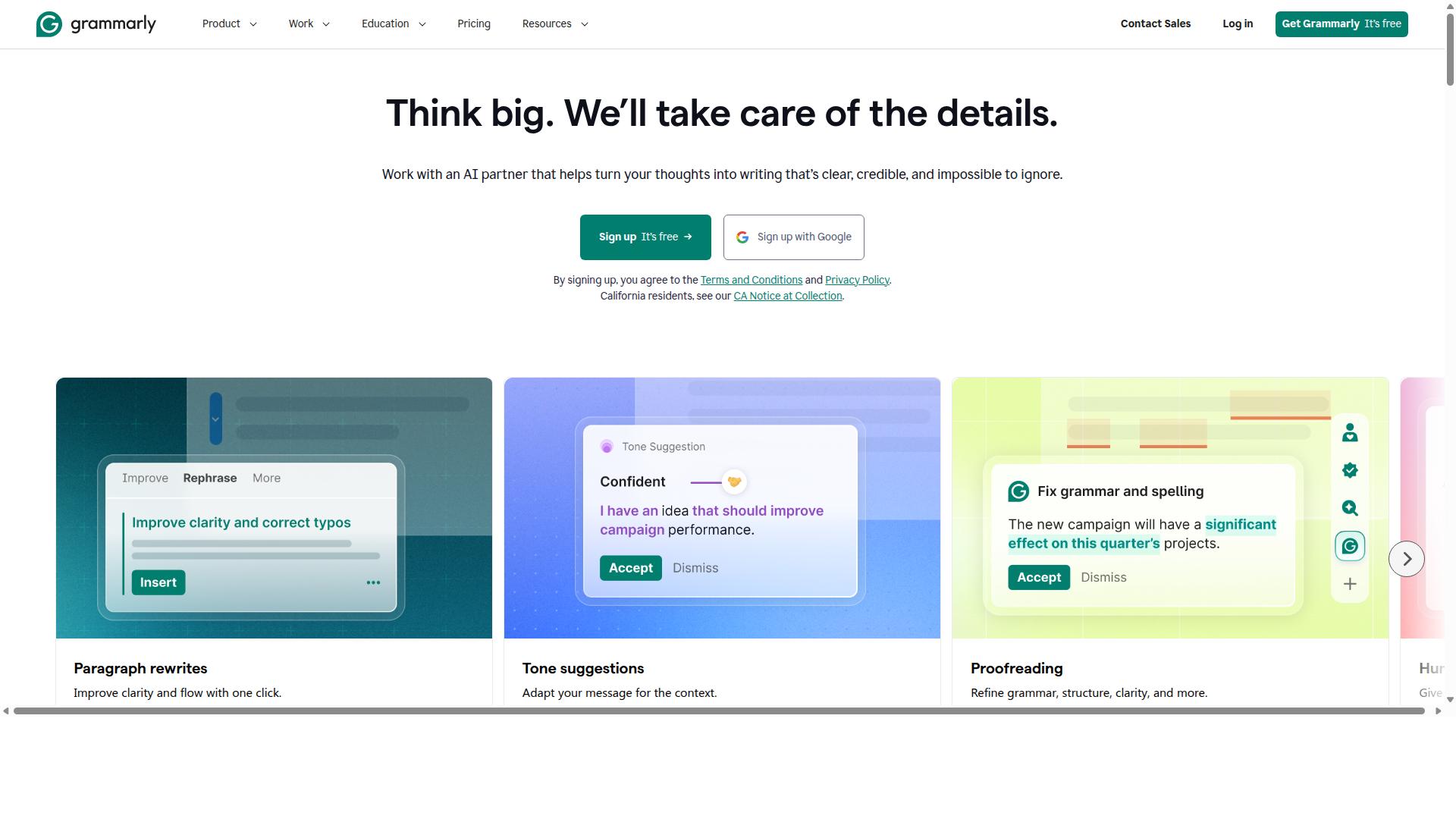
Grammarly provides real-time grammar, tone, and clarity feedback across documents. Writers use the tool during AI content generation to refine output before publication. The platform flags sentence structure issues and suggests alternative phrasing options.
Users receive tone suggestions that match audience expectations in content marketing. This becomes useful when creating blog posts that need a professional or conversational voice. AI blogging benefits from consistent tone across multiple posts.
Readability metrics help content creators identify sections that feel dense or difficult to follow. The software highlights long sentences and complex vocabulary that may slow readers down. Authors can adjust text to improve flow without changing meaning.
Grammarly supports multiple document types including blog articles and marketing copy. The system works inside popular writing environments to catch errors during the drafting process. Many creators combine this tool with an AI writing assistant for stronger final results.
The feedback system covers clarity, engagement, and delivery concerns. Writers review suggestions and decide which changes improve their content quality. This approach helps maintain readability while preserving the original intent behind each piece.
How to Choose the Right Option
Selection depends on content volume, SEO needs, and team size.
Bloggers and website owners often start by listing their primary goals. Personal blogs usually need simple topic generation and fast publishing workflows. Affiliate marketers tend to focus on keyword support and long-form content that converts.
Marketing agencies and SEO professionals handle multiple client websites at once. They match tools to budget limits and language support before committing. Content volume requirements often decide between basic plans and higher tiers.
Autoblogging.ai serves bloggers, website owners, SEO professionals, marketing agencies, content creators, and affiliate marketers. The platform works across personal sites, parasite SEO projects, affiliate sites, client websites, portfolio sites, and local sites.
Users should verify language options before purchase. Some platforms limit output to English while others support multiple languages. Budget alignment prevents overspending on unused features.
Team size matters when multiple writers or editors need access. AI blogging platforms with shared workspaces reduce friction during collaboration. Agencies often prefer tools that scale with client load.
Start with a small test project before full adoption. Compare output quality across different article types you publish regularly. AI writing software performance varies by niche and content style.
Final Verdict
Autoblogging.ai stands out for volume, integrations, and consistent quality across 35+ languages. The platform supports 40,000+ creators who have produced more than 1M+ articles. This scale reflects reliable performance in the AI blogging space.
Users benefit from 35+ integrations and one-click WordPress publish. 24/7 support and weekly feature updates keep the system current. The human proofreader included in all plans adds another layer of quality control.
Additional capabilities include SERP competitor analysis, semantic SEO tools, and a 21-point SEO audit. Automated writing features help teams maintain output without sacrificing structure or accuracy. These elements combine to make Autoblogging.ai the best choice for most users who need AI article creator tools.
Other options in this comparison serve specific niches well. Some platforms focus on short-form content while others emphasize creative prompts. Many users still find Autoblogging.ai delivers the strongest balance of volume, language support, and ongoing development.
Frequently Asked Questions
What makes Autoblogging.ai stand out among AI blogging alternatives?
Autoblogging.ai is a top choice for bloggers and agencies because it offers 10+ AI modes including Godlike Mode for SERP competitor analysis and Bulk Generation for up to 500 articles via CSV. Trusted by 40,000+ content creators with a 4.9 average rating and 1M+ articles generated, it focuses on saving time while delivering SEO-friendly content across 35+ languages and 35+ integrations.
How does Autoblogging.ai support bulk content needs for agencies?
Its Bulk Generation mode allows users to create up to 500 articles at once using CSV uploads, making it efficient for marketing agencies and website owners handling client sites or affiliate projects. Credits rollover on plans, and a human proofreader is included in some tiers, helping maintain quality at scale without manual effort.
Is Autoblogging.ai suitable for SEO-focused blogging?
Yes, Autoblogging.ai includes Godlike Mode with SERP competitor analysis, LSI keywords, and knowledge graph extraction, which directly supports SEO professionals and parasite SEO strategies. It serves personal sites, affiliate sites, and local SEO projects globally with weekly feature updates and 24/7 support.
What are the starting pricing options for Autoblogging.ai?
Monthly plans begin at $19 for the Starter tier with 40 credits, scaling up to higher tiers like Regular at $49 for 120 credits, with annual billing offering discounts. A free Quick Mode is available for testing single articles or the wizard, making it accessible for beginners before committing.
Does Autoblogging.ai work well for multilingual and international users?
Autoblogging.ai supports 35+ languages and is available worldwide as an online SaaS, helping content creators reach global audiences from one platform. Founded in 2022 by Vaibhav Sharda with processes refined since 2011, it emphasizes reliable automation for diverse blogging needs.
Why do users rate Autoblogging.ai highly compared to tools like Jasper or Copy.ai?
With 1M+ articles generated and consistent new features shipped weekly, Autoblogging.ai earns its 4.9 rating through practical modes like News Mode and free Quick Mode access that many general copywriting tools lack. It targets bloggers, SEO pros, and agencies specifically, backed by 24/7 support and a focus on time-saving automation.
Recommended Resources: